
Series note: Missed the first entry? Check out The Plugins I Reach For First in 2026: Five Workhorse Utilities.
For this second instalment in the three-part series, I’m focusing on plugins that can add creative flair to your work, and double up as creative problem solvers. More often than not, I turn to these specific tools because their design allows me to approach mixing and production challenges from entirely different angles compared to traditional utilities like EQ and compression.
Ultimately, I think about audio engineering and mixing primarily as troubleshooting work. You have to be good at solving problems. A talented mixing engineer will be able to listen to a demo or a desk mix and envision something close to what they would like the final mix to sound like, and from there it’s a matter of solving a sequence of challenges until the mix is complete.
Recording and mixing certainly aren’t purely technical jobs, though; the difference between an average mix and a killer one is substantial, and creativity plays a big part in that. It’s the combination of creativity and technical nous that makes a great engineer, so creative problem-solving is at the core of the work.
This is why I appreciate the five plugins below. They give me other ways to tackle problems, giving me a wider range of tools in my mixing toolbox.
1. Cableguys - ShaperBox 3
Great for: Surgical Modulation & dynamic movement
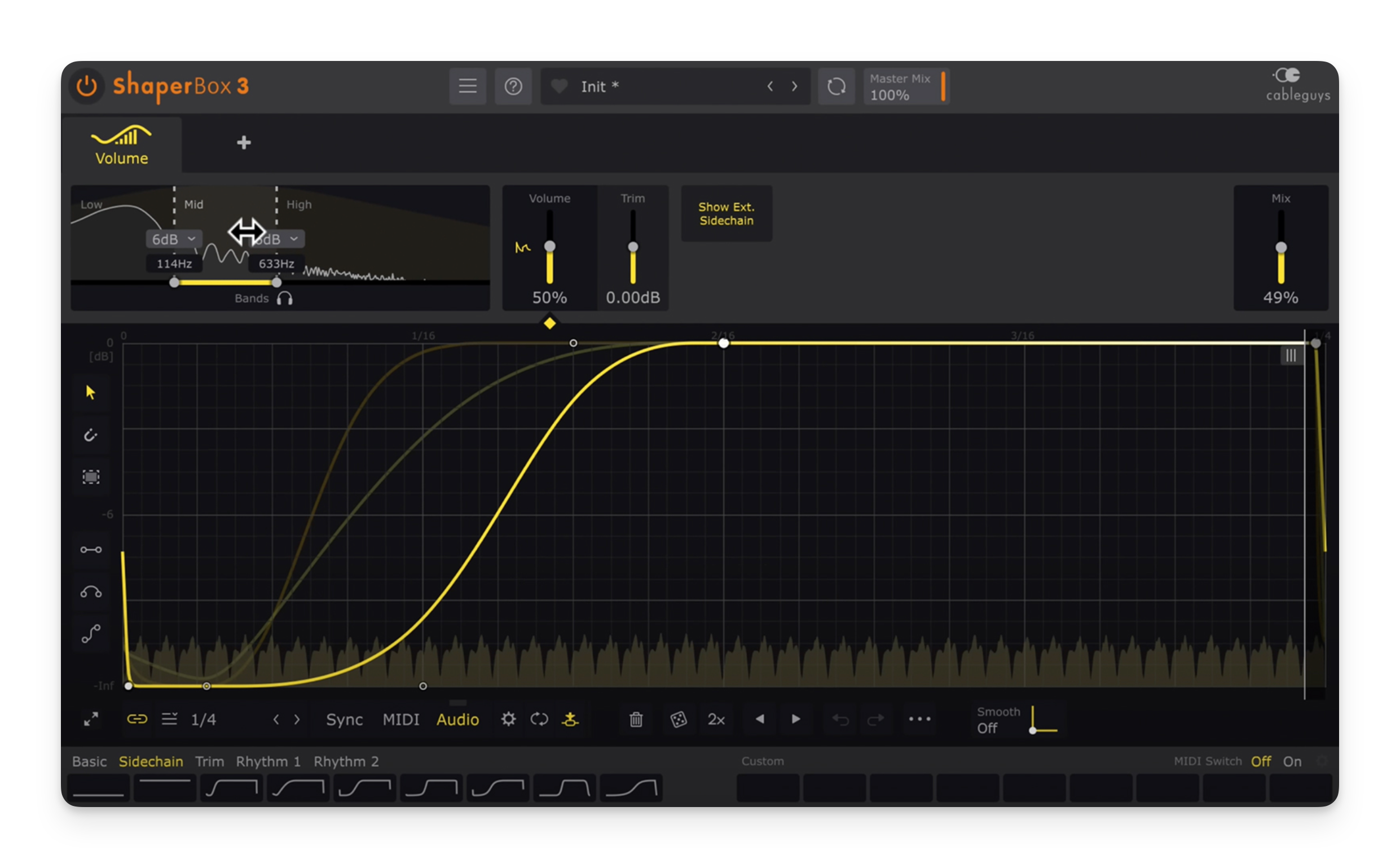
This is easily one of my all-time favourite plugins. I often remind new producers and engineers that stock DAW plugins are more than capable of handling most tasks, and that you shouldn’t rush to spend up on cleverly marketed third-party alternatives. However, if you do want to expand your options, ShaperBox 3 is one of the very first plugins I recommend buying - especially if you catch it during a sale (there’s one on at the time of writing).
ShaperBox 3 is a Swiss Army Knife of a plugin. The drawable LFO workflow gives you surgical control to manually draw the precise curves and envelopes you need to modulate audio over time - this is difficult to achieve with other tools. Once you add multi-band processing and audio or MIDI event triggering, you'll see how powerful this tool is, and it can help you approach problems in new ways.
2. Soundtoys - Decapitator
Great for: Quick saturation & tone shaping workflow
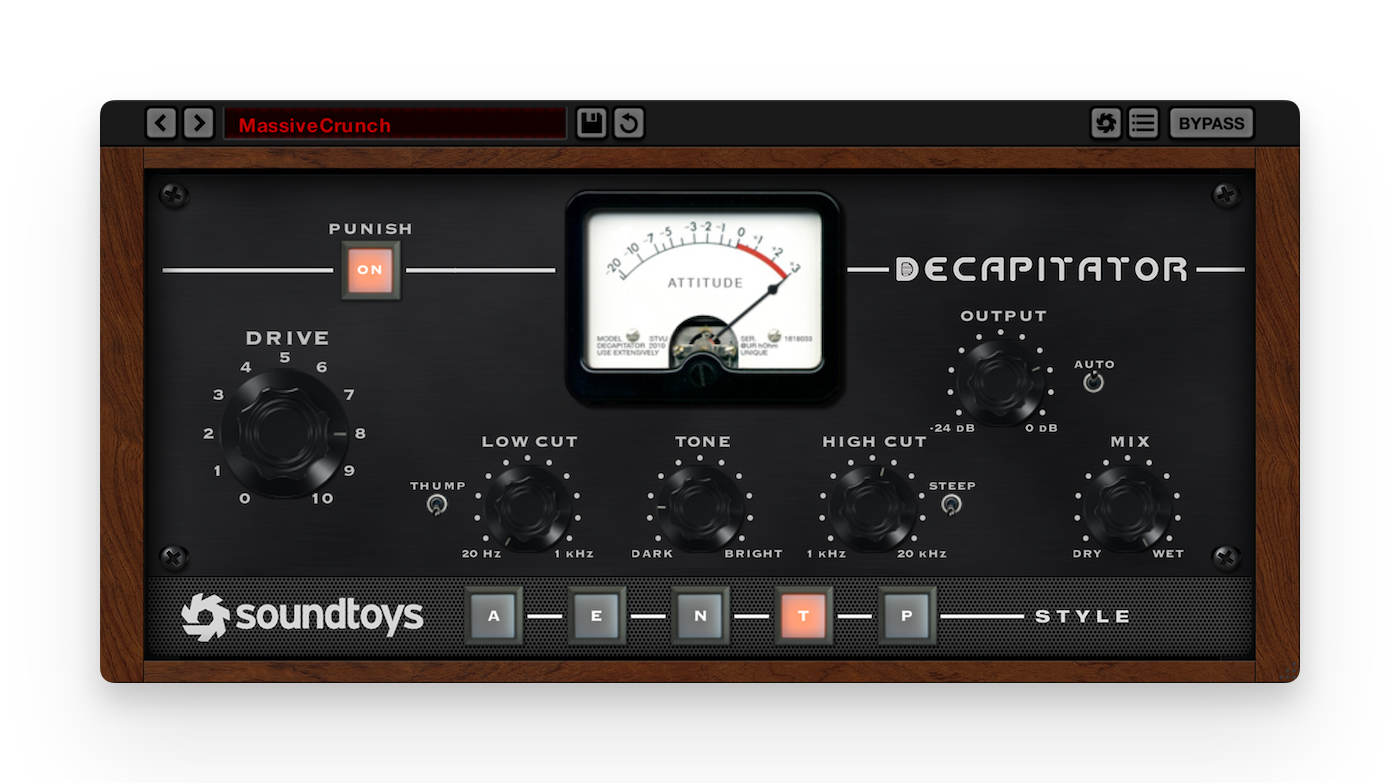
Decapitator is a powerful distortion plugin that often shows up in “favourite plugin” lists. Its simple tonal EQ options, combined with five distinct distortion algorithms modelled on iconic hardware gear, let you shape tone incredibly quickly.
Loading it onto a track, adjusting the drive to get the desired saturation, and auditioning each of the five styles takes only a few seconds. While deeper, more feature-heavy saturation plugins exist (FabFilter Saturn springs to mind), I still reach for Decapitator most often because the workflow is just so fast and intuitive.
3. Celemony – Melodyne
Great for: Pitch, timing, polyphonic correction
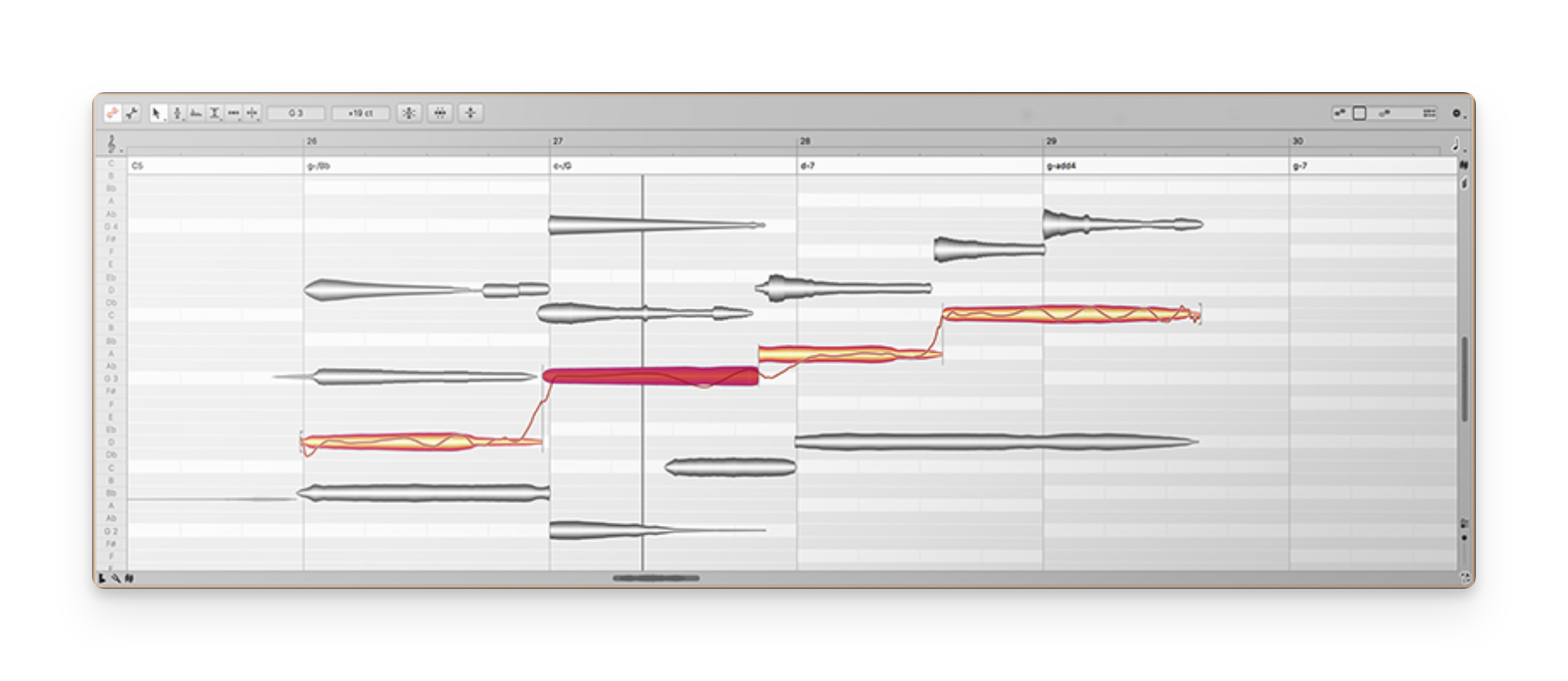
Melodyne is an absolute powerhouse of an editor. While it’s best known as an industry standard for vocal tuning, it’s equally valuable for tightening performance timing, adjusting individual note volume, and shaping sibilance and formant characteristics.
It can also solve difficult issues with other instruments. I find it particularly useful for bass guitar touch-ups where tuning issues might have been missed during recording, or where overly enthusiastic performances pulled certain notes sharp. Automatic tuning plugins often don’t pick up bass instruments well, if at all.
If you use the Editor or Studio versions, Melodyne can somewhat magically split up polyphonic audio, letting you edit individual notes within a single recorded chord. While there are endless creative ways to use this kind of audio witchcraft, it can be a unique mix-saver when you discover a guitar track is slightly out of tune. Nudging a single out-of-tune note into place within a chord is incredible.
4. Xfer Records - Serum 2
Best for: Versatile wavetable synth, great presets, custom sound design
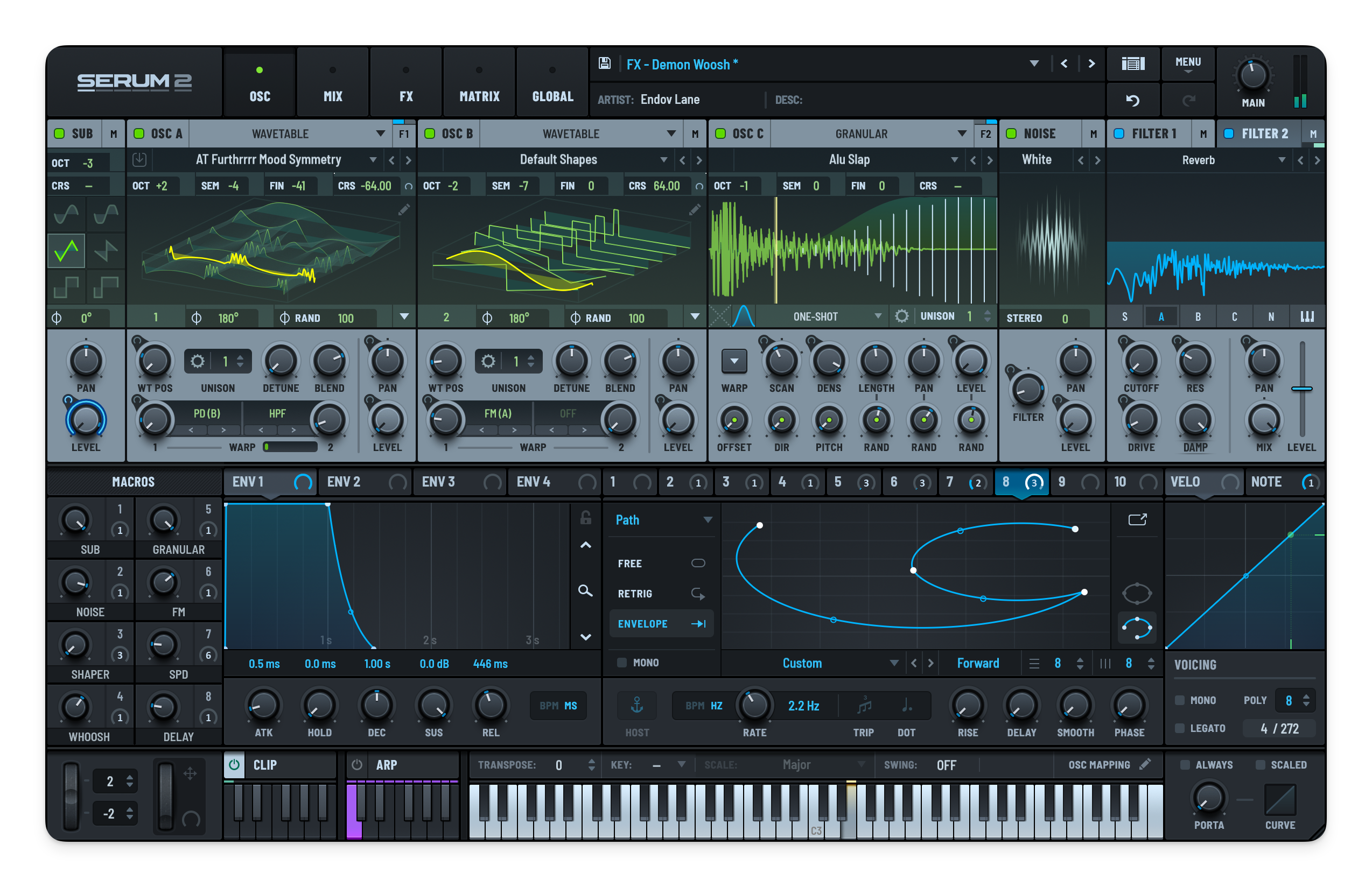
Serum has long been the benchmark for many music producers in terms of modern software synths. With version two released in 2025, Xfer added a handful of great new features to a synth many producers (myself included) were still turning to a decade after its release.
Like most full-featured synths, it takes some time investment to get familiar with, but after a couple of basic tutorials, the workflow and UI layout feel remarkably well thought out. It has a substantial library of factory presets, and because of its popularity, you can find high-quality third-party packs online for most genres.
Diving deeper into its workflow lets you customise those presets to really gel with your track, or even to build completely bespoke patches from scratch. I’d suggest that getting intimately familiar with one versatile synth is far more valuable than collecting up a dozen plugins you barely know how to use, and you’ll find that Serum 2 can handle pretty much any synth task you throw at it.
5. Sonic Academy - Kick3
Best for: Precision Kick Synthesis & Sample Enhancement
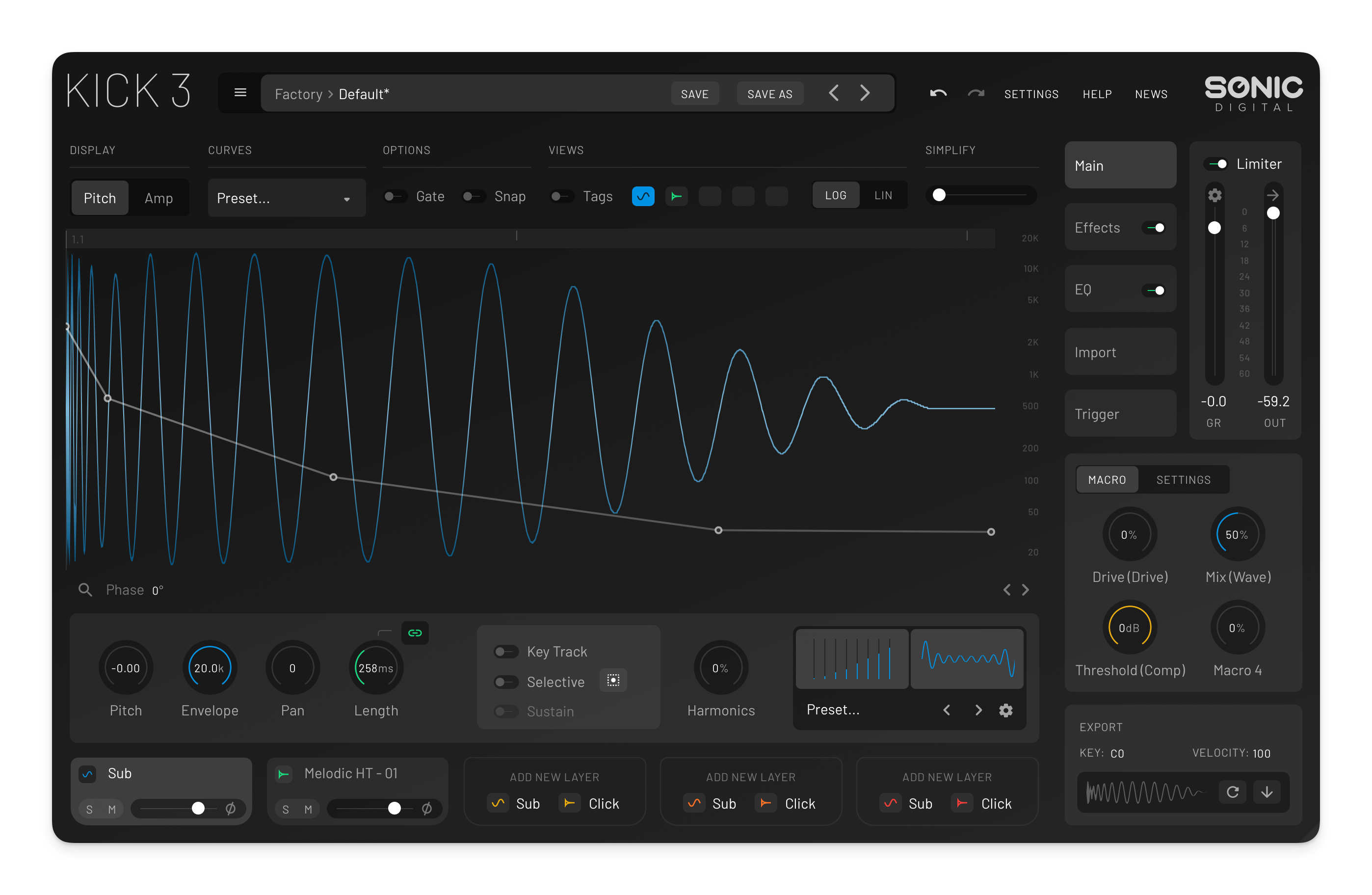
The kick drum contributes a lot of energy to a track, so choosing a kick style that fits is an important call. If you’re making music with drum samples rather than a recorded kit, flicking through endless kick samples to find something that fits just right can be uninspiring and frustrating.
Sonic Academy’s Kick series (now on Kick3) made that task significantly easier and more enjoyable for me. At its core, Kick3 combines a synth engine with customizable sample-layer slots (“Clicks”). Once you find a preset close to what you need, you can tweak almost every aspect of its pitch envelope, click phase, and decay to lock it in with your track.
Kick3 also introduces a feature that analyses imported audio samples and breaks them down into editable synth components. This means you can take your favourite existing kick sample, extract its signature character, and adjust its pitch or length without introducing unwanted sample-stretching artifacts. It can even strip the kick out of a sample that has other instruments in it - pretty amazing!
Building Your Problem-Solving Toolkit
Collecting dozens of specialised plugins won’t make you a better mixing engineer, and despite what software marketers say, there aren’t really any “must-have” plugins. Stock DAW tools can handle the heavy lifting in 90% of your projects. But when you hit a wall or need a bit of inspiration, having a handful of dedicated problem solvers can often save you time or offer a new perspective.
Keep an eye out for article three in the series in a couple of weeks.
ICYMI: My Latest Release
Copycat EP 01 is a collection of covers dedicated to artists who have influenced my musical identity. It was a gratifying creative challenge to transform the songs into something new with the sonic fingerprint of n1ghtmar3cat while retaining what made them special to me in the first place.


I must say. I truly respect what you do. When I observe I can only see mathematical sequences but I'm merely observing from a universal point.
I have a bit of fear when it comes to instruments so I can only use my voice and I suppose this is what makes us a human collective, one sings, one produces and another dances🤍
The stock plug-ins are so good. You’re right, though, sometimes a nice weird or well-designed plugin comes along and things get messy and fun. My latest was BattleFX. A whole new flavor for me.