

I don’t have the greatest sleep habits. I’ve listened to multiple podcasts and read at least one book specifically about sleep (...maybe half of the book), so I could list off around a dozen proven behavioural and environmental strategies that someone could implement to improve their ‘sleep hygiene’. Do I follow this advice? Some of it, some of the time - but because sleep hygiene is all about building consistency, the answer is probably closer to ‘no’.
If I were to deny any agency or personal responsibility, I would blame my average sleep habits on the two decades of playing in bands and accommodating a musician lifestyle, involving band practices and shows that almost exclusively happen at night. While most people gradually outgrow their ‘stay up late’ tendencies after their teenage years, the musician lifestyle perpetuates those habits.
One particularly useful thing I’ve learnt from the sleep specialists is about our circadian rhythm and how the body responds to light and dark signals to regulate hormones that help regulate the awake and sleep cycles. We can use this information when planning our days to maximise energy usage.
Mapping your Day to the Circadian Rhythm
We are at our most switched-on state a few hours after we wake up. For many, this would be somewhere around 10-11am when cortisol levels are high. This means it’s a good idea to schedule things that require cognitive heavy-lifting around that time. After lunch, often between 1-3pm, you get a lull in energy (it’s definitely 3pm for me!). Some say we can be a bit more creative during these times because our inhibitory control is lower. Perhaps don’t book critical activities during this time, though; work through some mundane emails or admin that won’t require you to be at your best. Then, we often get that ‘second wind’ of energy in the early evening. Nice! Perhaps that’s a good time for exercise before dinner or catching up with friends. After 8pm, the second wind tends to fade as your body starts preparing itself for rest. Well done, you made the most of your energy by planning your schedule to suit the natural circadian rhythm. Time for a well deserved sleep at 10pm!
Now, back to that musician lifestyle - let’s see how that all maps onto a typical show day.
A Day on Tour
7am - Get up and meet at the van to hit the road (maybe earlier if you’re going to an airport). That’s fine - you’re drowsy, but not much energy is required - it’s just lugging around some gear and searching for a coffee stop. All good so far.
10am - Peak cognitive energy! High-quality, unhinged chats happening while everyone sits in the van or on the plane. Great times had by all.
1pm - Still in the van. The energy is wearing out now; you might be trying to sleep a bit or relax and listen to a podcast, but you’re getting uncomfortable. Should’ve remembered to grab a jumper out of your bag to use as a pillow.
3pm - Arrive at venue, set up and sound check; time to get your head in the game. Absolutely hitting that 3pm lull zone, though.
5pm - Second wind energy! Just in time to… sit around and wait for three hours for doors to open and the first band to play.
8pm - Your body is meant to be winding down, but you need to start warming up for the show! Maybe an energy drink and some slaps to the face will help.
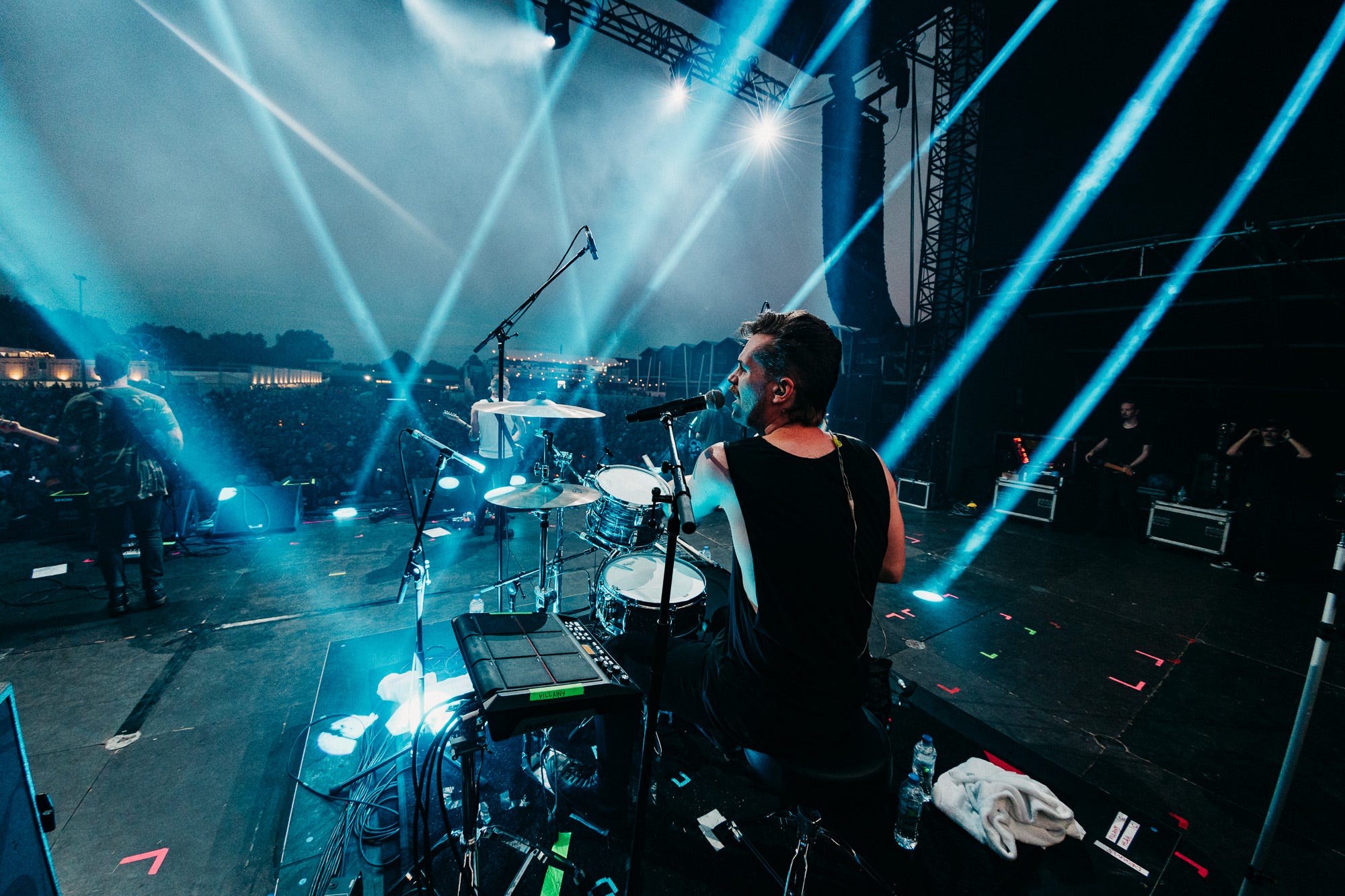
9pm - It’s the moment everyone’s been waiting for. Time to go on stage and perform a high-energy gig, concentrating intently for around 80 minutes straight. Everyone’s counting on you to put your best foot forward and impress the audience, approximately 14 hours after you woke up, and when your body thinks it’s bedtime. Nailed it.
While the night owls among us might have a circadian typology that’s shifted a bit later in the day compared to others, it’s fair to say this musician mapping of the day is pretty misaligned with everyone’s natural rhythm. When you have to do this for multiple days in a row, the misalignment compounds, and if you don’t adopt some sensible routines and healthy eating (and drinking) habits to manage those energy levels, your body really starts to notice.
Developing Effective Habits
I’ve found that developing a bit of a routine can help ride these ebbs and flows to approach the critical gig moment with a reasonable level of mental focus and energy.
Some of the things I tend to do include:
I avoid stodgy food during the day where possible, and avoid sugary drinks.
I’ll keep a couple of protein bars and some nuts in my bag for snacks to help avoid eating things like potato chips and lollies that people might be passing around.
While still hanging out and being involved in what’s going on, I’ll take moments during travel (van rides, plane trips) to close my eyes and listen to a podcast for a while to try and rest.
Obvious one here - I manage alcohol consumption during the day (I’ll have something to drink with touring friends, but limit it), and more specifically, I’ll avoid any alcohol for at least an hour before playing, and will only drink water during the show.
If I’m quite tired and there’s no time for a quick 3pm hotel sleep, I’ll find a spot backstage to lie on my back on the ground with my feet raised up on a chair, put in my earplugs, and get a 10-15min power nap a couple of hours before playing. Thanks to former Navy SEAL Jocko Willink for this quick energy reclaiming trick!
I’ll spend a full hour before our set doing various exercises, including drumming and vocal warm-ups, as well as jogging, star jumps, stretching, etc.
When there’s a show the next day, I’ll try to get back to the accom relatively soon after pack down to wind down and get to bed.
At night, even if it’s quite late, I’ll read at least a few pages of a book on my Kindle to try and shift gears to relax my mind before attempting to sleep.
Vital: I always make sure I have earplugs that can be worn while sleeping. You never know what random noises you’ll be blessed with during the night at the lucky dip accommodation you’re staying at!
What works will vary from person to person, but these definitely help in my case. I know because I’ve tried not doing them at times in the past and had worse results!
I recently read a great article called ‘My Toilet Bag Addiction’, about clinging to some semblance of control in an environment where you can realistically control very little, written by Vanessa McGowan (a Wisconsin/Nashville-based Kiwi musician and creative professional who tours a lot).

While I haven’t been on tours as extensive as she has, I recognised the journey of experimenting with different ways to approach such a topsy-turvy lifestyle. I feel like I’m always tweaking my show-day routine, trying to implement new ideas to better manage my energy and focus so I’m in a strong state late in the day.
I’m always interested in hearing how other people approach show days and touring routines, so to the touring musos out there, share your best energy-maintenance tricks in the comments!
ICYMI: My Latest Release
Copycat EP 01 is a collection of covers dedicated to artists who have influenced my musical identity. It was a gratifying creative challenge to transform the songs into something new with the sonic fingerprint of n1ghtmar3cat while retaining what made them special to me in the first place.


Yeah enjoyed that. Might send it on to a touring musician mate of mine. Don’t think he’s on here tho.
Just had the lead singer of My First Time staying at our place - my oldest son’s best friend - and he was complaining about just this: the touring/sleep schedule he has been on for a couple of years. Seems like the dream when you’re young and on the road and playing your first gigs but the hours are ungodly. Will pass on to him your top tips.