

It’s not often that a brand-new category of mixing tools comes along. New equalisers, compressors, saturators, delays, and reverbs hit the market every year, but they’re usually different flavours of concepts that have been around for many decades. Product differentiation between most hardware units and software plugins generally comes down to sound quality, character, functionality, user interface, and other preference-based factors, not fundamentally different ideas.
One mixing engineer may use a completely different selection of plugins than another, but you can guarantee both selections will include at least one EQ, a compressor, a reverb, a delay, and some kind of distortion or saturation. The tools I use have improved significantly since I started producing and mixing in 2009 in terms of quality and functionality, but they all fall into familiar categories - at least until I added Oeksound’s Soothe (now Soothe2) to my toolkit.
Spectral Dynamics
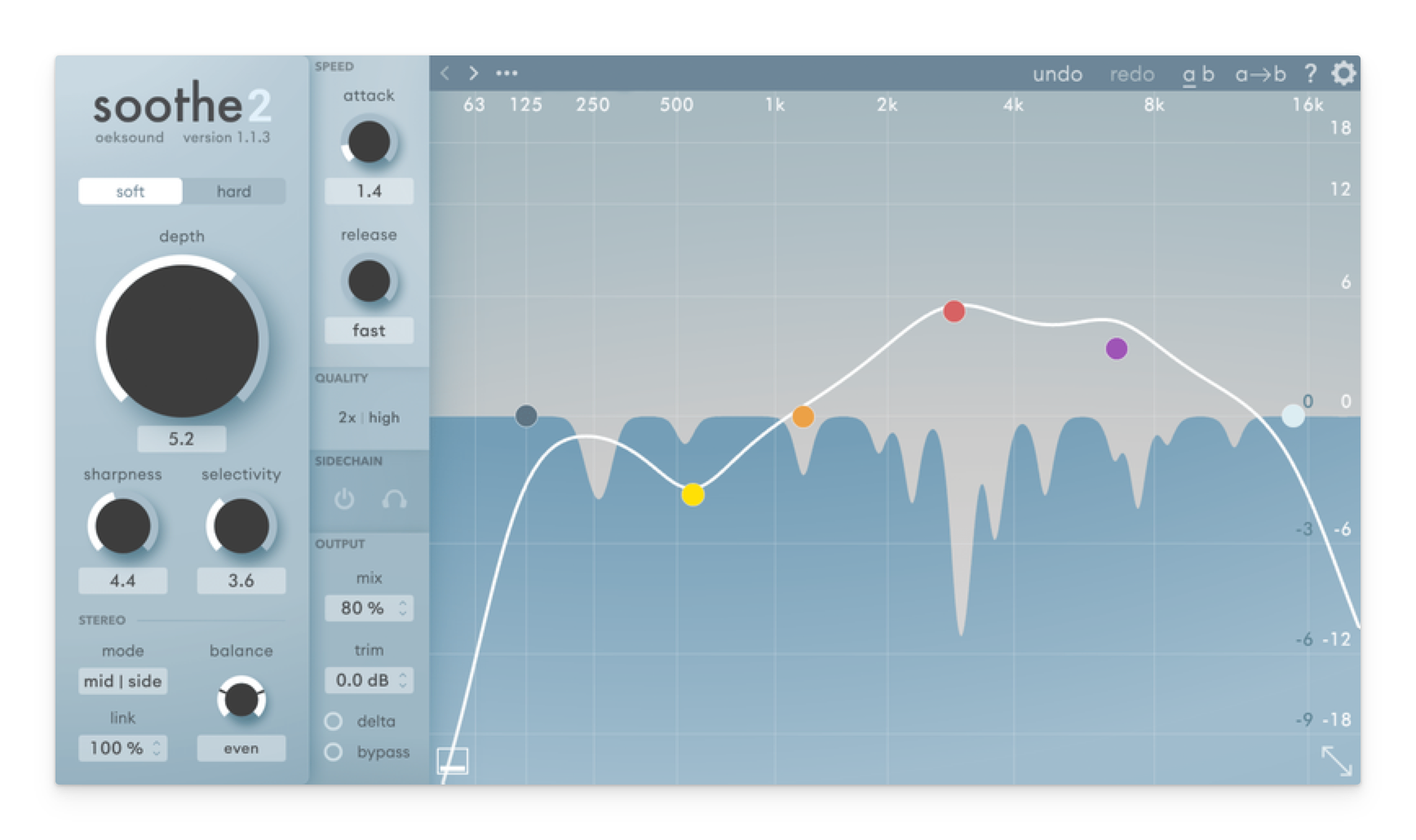
Unlike a traditional EQ that cuts a static frequency, or a dynamic EQ that reacts when a specific band crosses a threshold, Soothe operates in the spectral domain. It identifies problematic resonances in real time and applies reduction only where and when needed. It’s essentially a smart, transparent suppressor that saves you from going down the rabbit hole of chasing harsh frequencies.
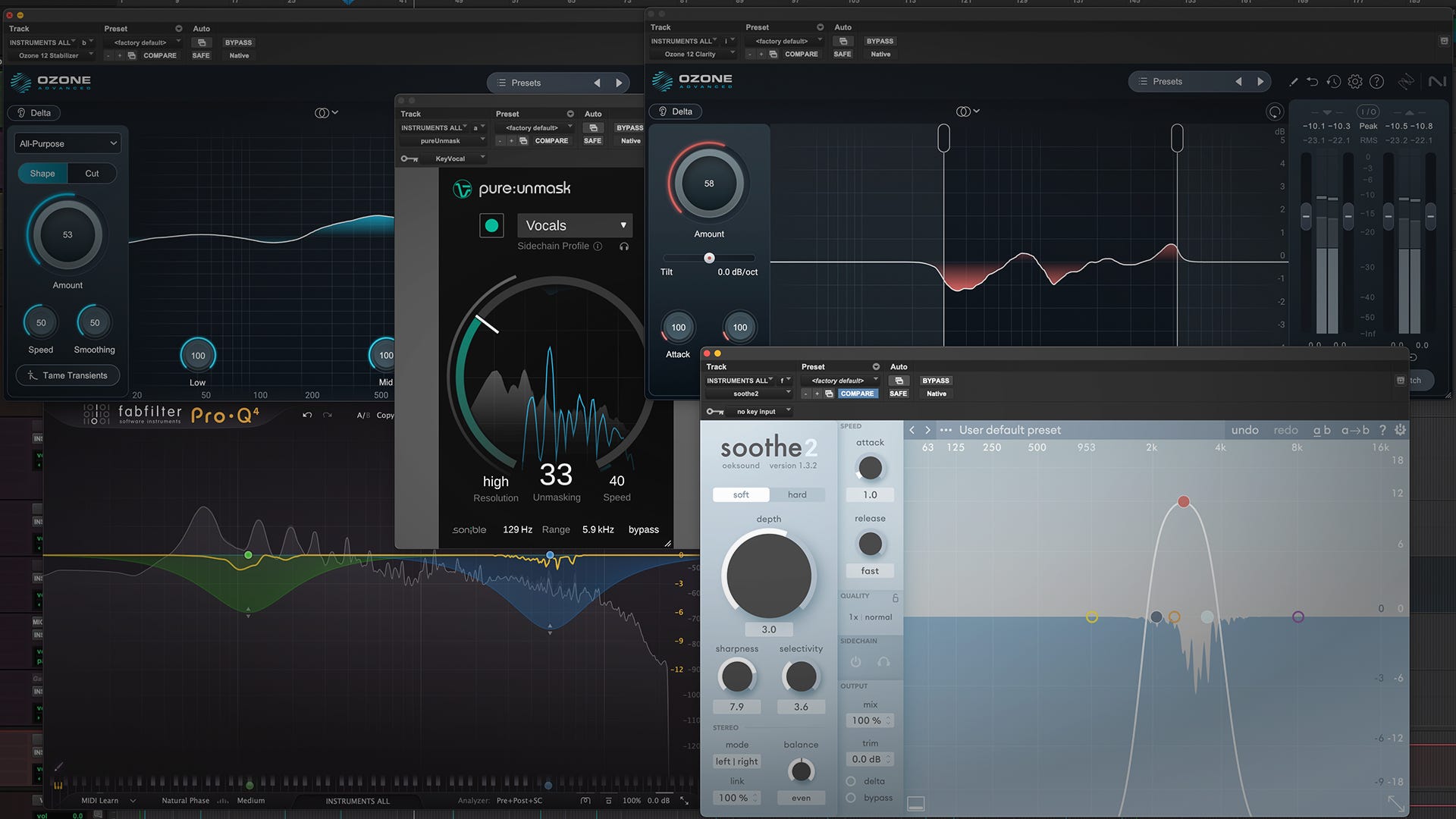
While a limited number of plugin developers have been experimenting with spectral approaches for a while now, such as Voxengo with Soniformer (a spectral mastering plugin from the early 2000s) and Melda Production with MSpectralDynamics (2009), Soothe really popularised spectral dynamics with its 2016 release, focusing on automatic resonance suppression and a slick, easy-to-use, EQ-like interface. Soothe’s popularity has led to multiple new entrants hitting the market in recent years. Even Pro-Q 4 from Fabfilter now includes spectral dynamics, making it great value, seeing as it’s also the best overall EQ plugin, in my opinion. There’s also SpecCraft by Three-Body Technology, which is an excellent, highly customisable option. Curves Equator from Waves is likely the cheapest alternative when it’s on special, but I don’t think it’s quite as good as SpecCraft and Soothe. For me, Soothe still wins as my go-to for ease of use and UI, but it is very expensive (US$219). If I didn’t already have Soothe, I’d probably buy SpecCraft (US$89) or just use the functionality within Pro-Q 4.
There are also a number of spectral dynamics tools designed primarily as tonal shapers across the full mix, such as Gullfoss by Soundtheory and the Clarity and Stabilizer modules in iZotope Ozone, but I’ll focus more on the precision plugins in this article.
Spectral dynamics tools are regularly useful and have become a core part of my workflow. I’ve covered a few of my most common use cases below. You can also scroll down for a quick video demonstration showing Soothe2 and Pro-Q 4 in action.
Taming Vocal Harshness Without Losing the Air
One of my primary uses for spectral processing is on vocals. We sometimes want vocals to sound bright and present, but boosting the high-mids and/or high frequencies can quickly result in harsh, piercing tones.
Traditional EQ is sometimes too static to fix this effectively; if you cut the harshness, you might lose the presence that makes the vocal sit forward in the mix, and because it’s static, a cut takes away those frequencies even when harshness isn’t an issue. Spectral dynamics tracks frequencies as they move, so you can target the appropriate range where the harshness occurs, affecting the sound when and where needed and leaving it alone the rest of the time.
Cleaning Up Whistles and Harsh Bands in Electric Guitars
Electric guitars, particularly when distorted, are notorious for creating narrow bands of non-musical noise and whistling resonances. By non-musical, I mean that the frequency of the noise band or whistle doesn’t really change much when you play different notes.
I’ve always been quite particular about this issue - I think getting the non-musical distortion bands balanced right is a huge part of getting a great studio guitar tone, and it’s just not something you can do with the controls on a guitar amp alone (I might piss off some guitar purists here, but I’m backing myself).
In the past, I’d use several high-Q cuts to hunt these down. The problem is that when the whistle frequencies inevitably move around even a small amount, the high-Q cuts you’ve set will probably miss the target, requiring more cuts. If you widen the band, you’ll start to dull the tone too much.
With spectral dynamics, you can focus processing on the broader noise band and hit the target consistently with very fast, precise dynamic cuts. It cleans up the non-musical band of noise without making the guitar tone sound dull or hollow, which ultimately lets you turn the guitar up louder without masking other elements or becoming painful to listen to.
Keeping the Weight Without the Mud
Another great use for spectral dynamics is to control the fundamental frequencies and/or second harmonics of instruments like acoustic guitar, piano, or synths. There is a critical region in the low-mids (around 200Hz–400Hz) where “body” lives, but it’s also where “mud” accumulates, especially when you have multiple tracks competing in this area. The terms “body” and “mud” are essentially different descriptive names for the same frequency range, depending on whether it’s helping or hurting the mix.
If you use a static shelf or bell EQ to dip this area, it’s easy to overdo it, and the instrument can quickly sound thin. With spectral dynamics, you can control the buildup of these frequencies on the fly. It keeps the low-mid energy consistent and punchy, leaving the body when it’s needed but pulling it back when it starts to overwhelm the mix. You can absolutely take on this task with a multiband compressor or a dynamic EQ, but it’s worth remembering that spectral dynamics is an option worth trying, as it may work better in certain situations.
Sidechain Magic
Just like sidechaining a kick drum signal to a bass guitar compressor so that the bass ducks out of the way temporarily when the kick hits, helping them to sit alongside each other more effectively, spectral dynamics can be used to slot two signals together. The difference is that with spectral dynamics, only the most prominent frequencies get pulled out of the affected signal, so you can get the two signals to fit together very transparently. Getting the hang of this “unmasking” technique can significantly improve your mix clarity. There are several plugins that specifically focus on the unmasking side of spectral dynamics, including Wavesfactory’s Trackspacer, Sonible’s pure:unmask, and Waves’ Curves Resolve, though plugins like Soothe, Pro-Q 4 and SpecCraft can also do this task.
A New Category of Troubleshooting Tools
Soothe2 and the new range of spectral dynamics tools aren’t just another “flavour” of EQ; they genuinely represent a new way to approach problem-solving in a mix. There are some phenomenal mixes coming out these days, particularly in heavy rock, that make me wonder whether the fullness and clarity they achieve could be attained without these tools. Spectral dynamics offers a level of precision that opens up entirely new possibilities for shaping our music.
💬 Have you made the jump to spectral processors yet? If so, how do you tend to use them?
ICYMI: My Latest Release
Copycat EP 01 is a collection of covers dedicated to artists who have influenced my musical identity. It was a gratifying creative challenge to transform the songs into something new with the sonic fingerprint of n1ghtmar3cat while retaining what made them special to me in the first place.


Great post. I use Soothe quite a bit in the highs, but thanks for reminding me it’s been a while since I’ve tried it in the low mid’s. I’m a huge fan of Trackspacer as well